

California now gives every resident the right to reach a real person when they call customer service of any large-sized business (at least $500M inrevenues). Governor Gavin Newsom signed AB 1609, the Right to Human CustomerService Act, in late September 2026, and it takes effect on January 1, 2027.For health plans that use AI Chatbots or AI Voice Agents to answer memberservices calls, it sets new rules. It is important to be transparent up frontthat the caller is talking to AI, make it easy to ask for a real person, andconnect them in a reasonable time.
The good news for the fifteen Healthcare Payer that use Voicegain Caseytoday is that our AI Voice Agent already works this way. Here are my thoughtson why the law was passed, what it requires, and how each part of Casey linesup with it.
Why AB 1609 became law
AB 1609 was written to end "chatbot purgatory": being stuck inautomated menus with no way to reach a person. Assemblymember Rick Chavez Zburintroduced it in January 2026, sponsored by the Communications Workers ofAmerica. He drew on his own experience spending hours on the phone trying toget medication for his elderly mother. Lawmakers cited a 2024 Ipsos survey inwhich 88% of people said they prefer talking to a human.
Thebill passed both houses in August 2026, and Governor Newsom signed it onSeptember 28, 2026. It takes effect January 1, 2027. The law does not ban AI incustomer service. It just sets some “guardrails” on how you can use it. The AI Agentcan answer as long as the caller clearly understands that they are talking to AIand a human is “reasonably reachable” upon request.
What AB 1609 requires of AI Voice Agents and Chatbots
Who is covered.
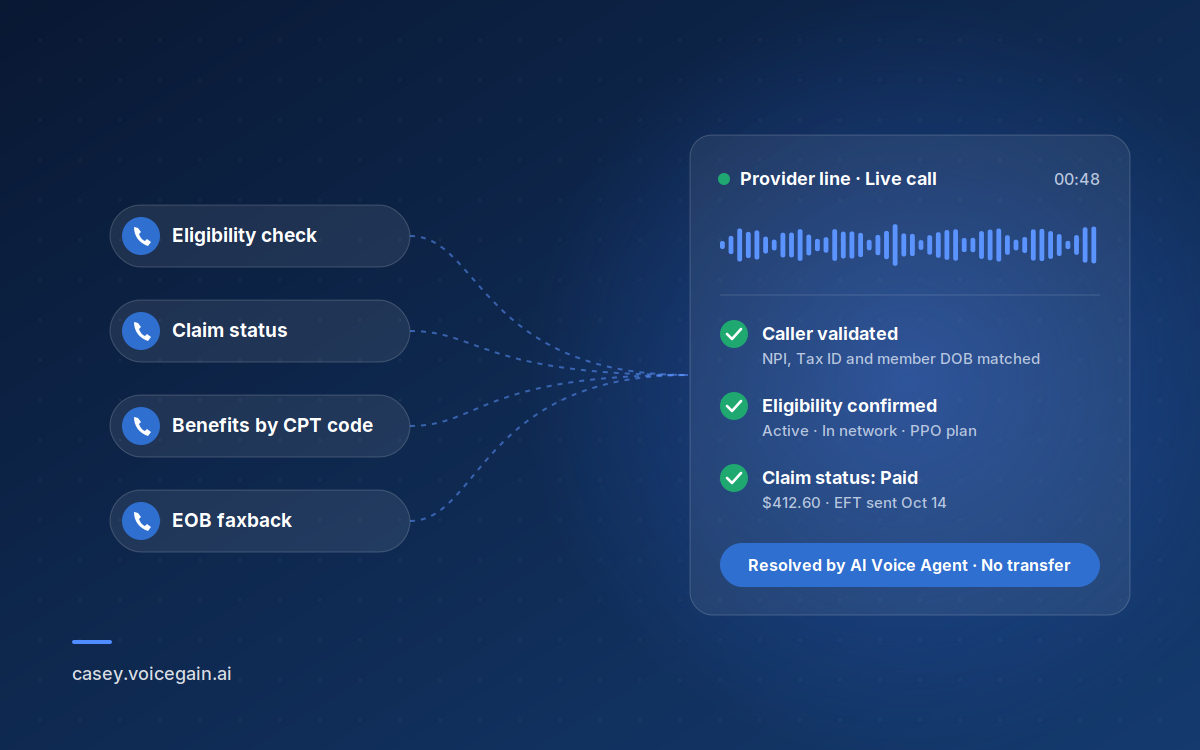
The law applies to "large private businesses" with more than$500 million in yearly revenue nationwide that serve California residents.Hospitals got a narrow exemption, but health plans, payers, managed careorganizations and PBMs did not. A payer that is above that revenue line shouldplan as if their AI Voice Agents & Chatbots need to comply. Likely in-scopecalls include eligibility, benefits, claim status, prior authorization, IDcards and Rx questions.
For teams building or designing a Chatbot or AI Voice Agent, the law setssix duties:
- Never claim the bot is human. A business may not say or suggest its chatbot is a person. With today’s emotive and expressive text-to-speech and highly accurate speech-to-text software it is almost impossible for a human being to distinguish an AI Voice Agent from a human agent just with the audio quality.
- Disclose the AI clearly. If a reasonable caller might think they are talking to a human, the business must clearly state that the agent is AI. The notice must come in the same channel, so a voice agent must say it out loud.
- Offer an easy way to reach a person. During regular business hours, every channel, including AI Voice Agents and legacy IVRs, must let callers ask for a human. Common commands, menu choices or a spoken request such as "agent" or "representative" all count.
- Connect fast or set a time. Make a good-faith effort to connect the caller to a live agent within 15 minutes of the request. Or schedule a specific callback within one business day.
- Limit hold times. After reaching an agent, no single hold should last over 15 minutes. Total hold and transfer time should stay under one hour.
- Post the phone number. Businesses that sell online and run a phone line must show that number clearly on their website.
Enforcement. Only public prosecutors can sue; there is no private right of action.Penalties reach $5,000 for a first violation and $10,000 for each one after. Abusiness that follows commercially reasonable practices designed to comply istreated as acting in good faith. Outages and emergencies outside its controlare excused. These duties add to, and do not replace, HIPAA, the CaliforniaConfidentiality of Medical Information Act and CCPA.
How Voicegain Casey meets AB 1609
Voicegain Casey was built around the same idea as AB 1609: AI should nevertry to conceal that it this AI. It should allow callers to resolve when they areable to and hand off cleanly when a member needs a person. Health plans usingCasey already have the key pieces in place.
1. Upfront AI disclosure
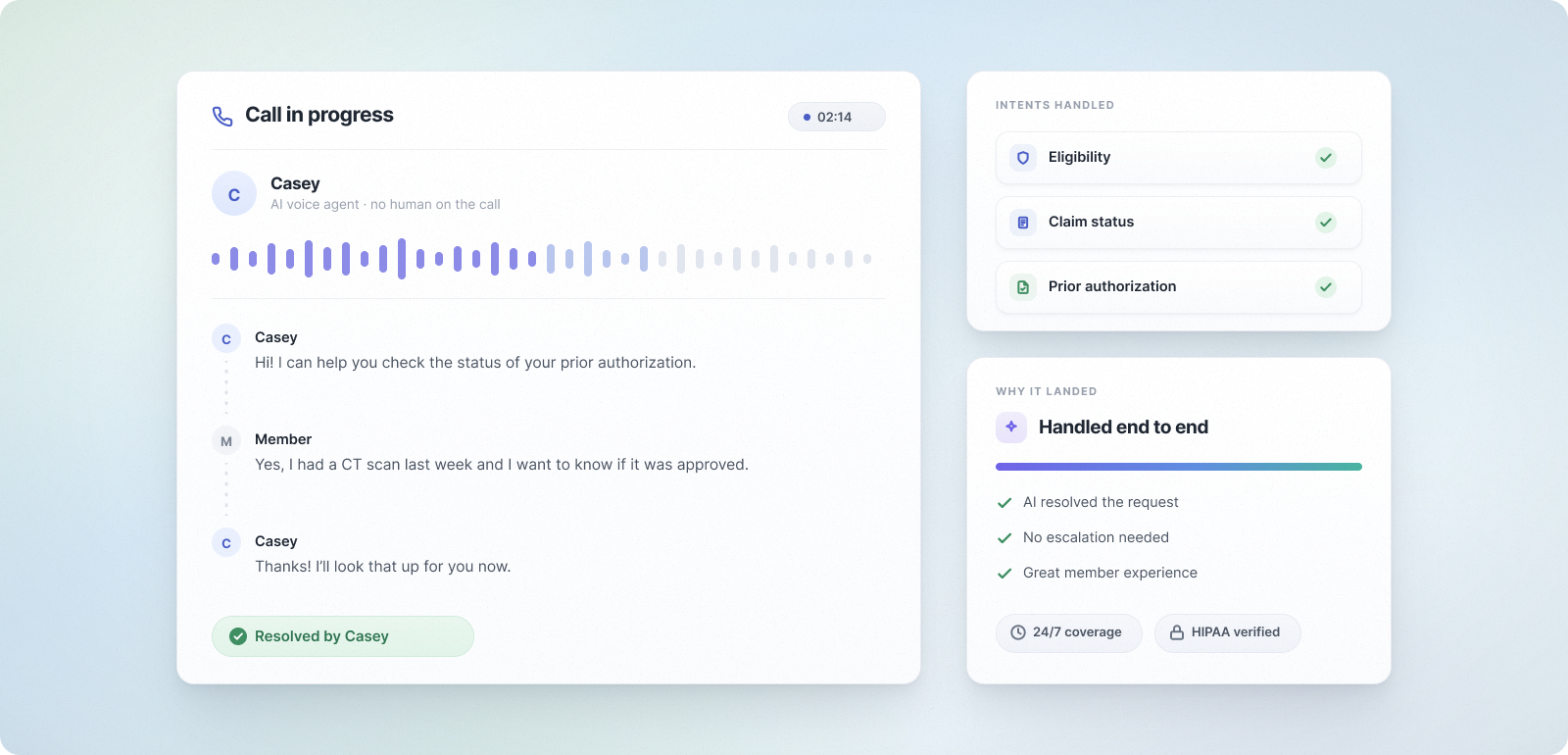
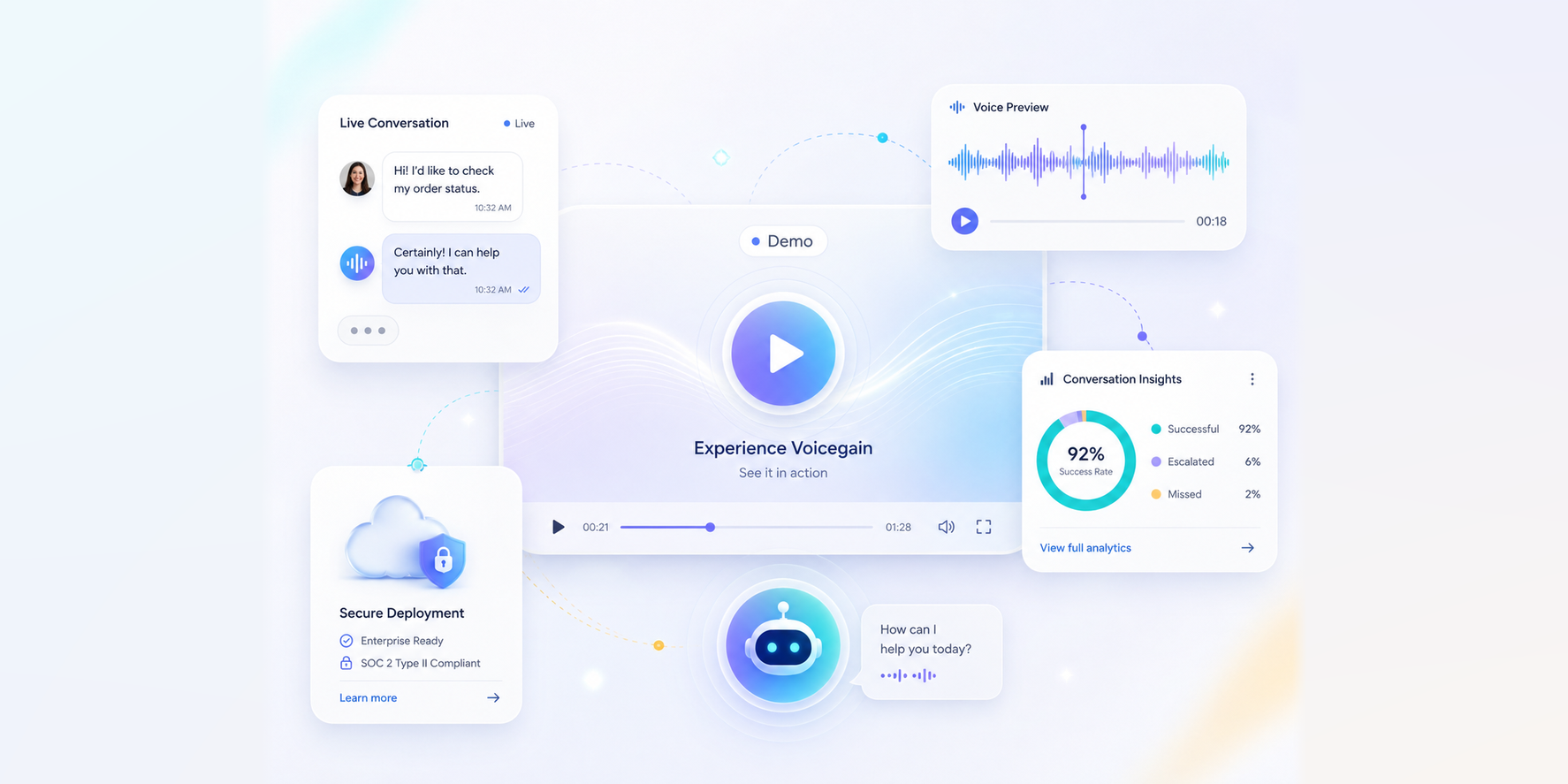
Casey tells every caller at the start that they are speaking with a"Hi I am Casey, a Smart Assistant." The notice is spoken in the callitself, which is the same channel AB 1609 requires. Casey never claims to behuman, so members always know who they are talking to.
2. A live agent on request, any timein the call
During business hours, a caller can ask for a live agent at any point inthe conversation. Plain requests such as "agent,""representative" or "let me talk to a person" work. Thereare no hidden menus.
Each client sets how hard Casey tries to keep the call. Casey makes onlya few limited attempts to help the member resolve the issue with AI beforetransferring. This avoids the endless loop the law was written to stop. Caseycan still offer quick self-service when it really helps.
3. A warm transfer with full context
When a caller asks for a person, Casey does two things:
- Routes to the right queue. Casey places the call in the queue that fits the member's issue, such as claims, eligibility or prior authorization. This helps the member reach a qualified agent quickly and supports the law's 15-minute target.
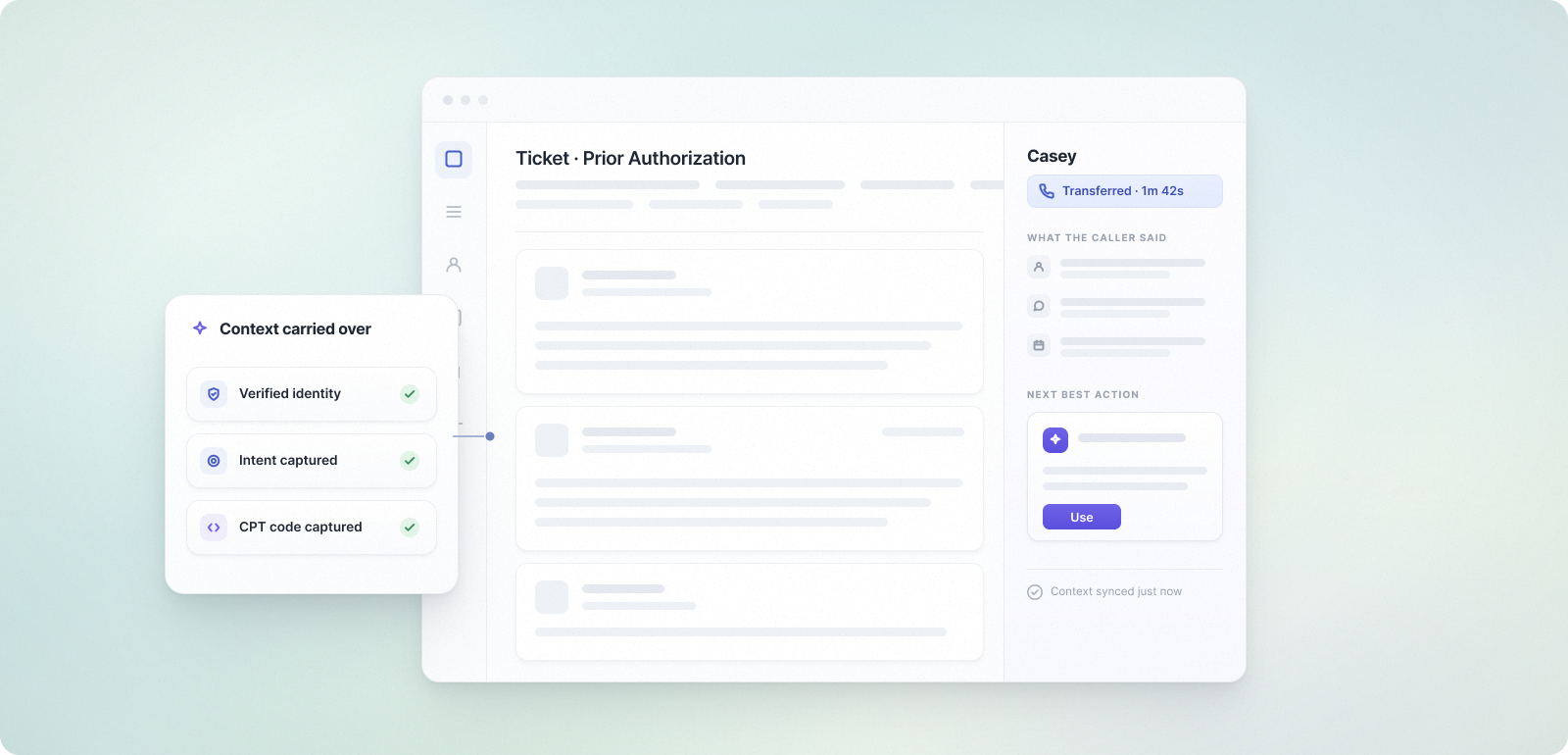
- Hands the agent a full summary. The live agent gets the context and a summary of the AI conversation. The member does not have to start over or repeat their HIPAA Validatoin, the reason for the call or what they already tried.
4. Real-time help for the human agent
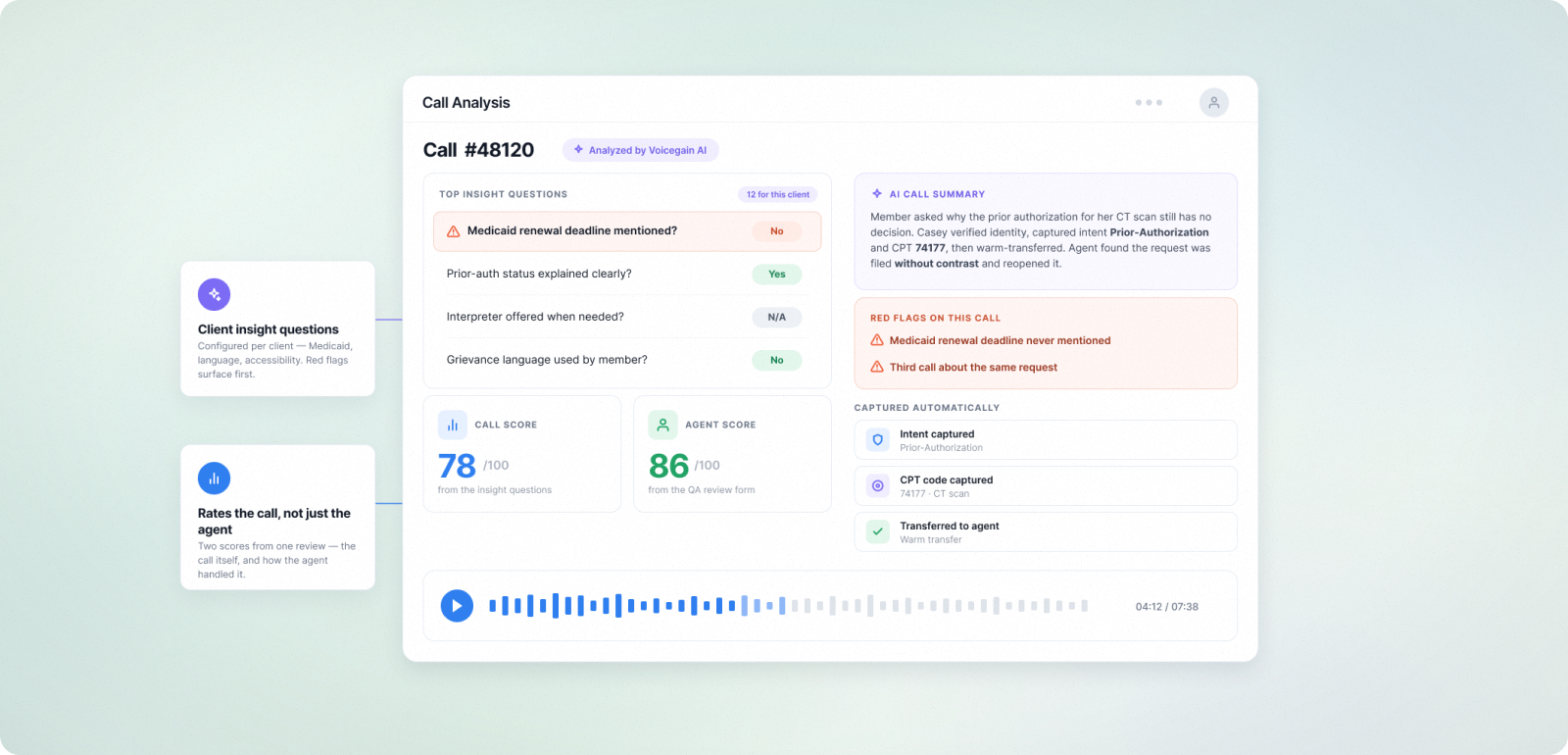
Casey stays on the line after the transfer. It listens to the liveconversation and gives the agent real-time guidance, next steps and summaries.This shortens handle times and cuts down on extra holds, which helps payersstay within the 15-minute single-hold and one-hour total-hold limits.
Taken together, these features cover AB 1609's core duties for AI voiceagents: honest disclosure, an easy path to a person and a fast, informedhandoff.
AB 1609 compliance at a glance
Some duties depend on the Payer's own operations, not the AI agent alone.These include staffing live agents to meet the 15-minute target, settingbusiness hours and posting the phone number on the website. Casey is built tosupport those duties, and payers should document their good-faith efforts tobenefit from the law's safe harbor.
Ready for January 1, 2027
AB 1609 does not ask health plans to give up AI. It asks them to behonest about it and to keep a person within reach. Payers that use VoicegainCasey already meet the key requirements for AI voice agents: upfrontdisclosure, escalation on request and a warm, context-rich handoff that keepshelping after the transfer.
With the law taking effect on January 1, 2027, now is the time to reviewyour member contact center. To see how Casey can help your health plan servemembers with AI while staying compliant with AB 1609, contact Voicegain for ademo.
This post is for general information and is not legal advice. Healthplans should consult their own counsel about how AB 1609 applies to them.